
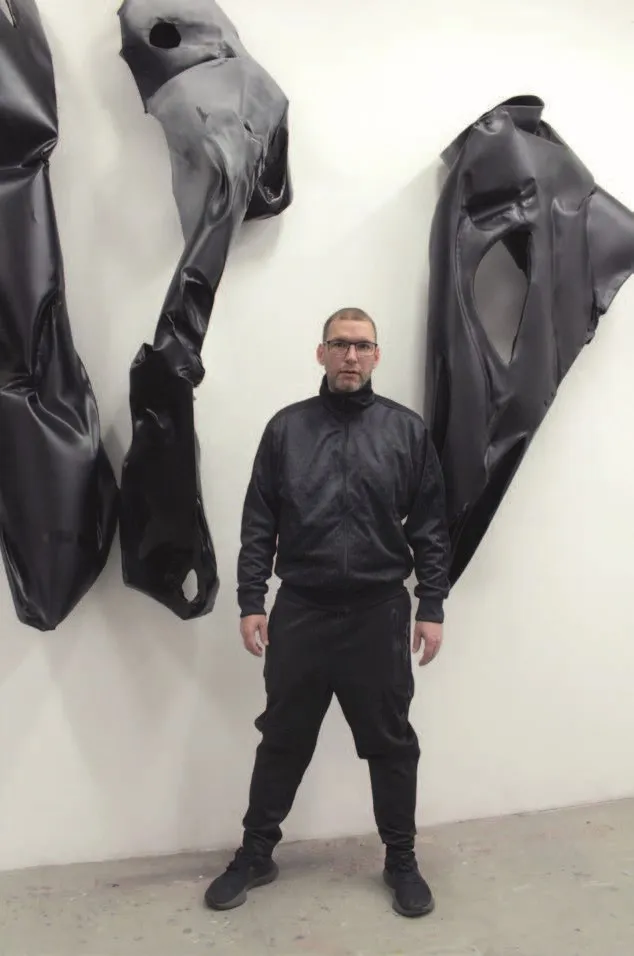
In his work, Martin Böttger explores human evolution as an abstract investigation of the body and its optimization, as well as its position within the age of information, neuroscience, and biotechnology. The body and its appearance are in a constant state of enhancement, shaped to specialize and to function more effectively within its environment.
The resulting works are hybrid developments and manipulations—shaped by desires and dystopian undertones of human existence. They are realized as enlarged close-ups, limb like objects, and bodily sculptures. Through the use of exclusively artificial materials and often intense, exaggerated color schemes, Martin Böttger highlights bodily separation and its dissolution into the unnatural. The utopia of the most efficient body generates a dystopia of alienated body parts and extensions that we unconsciously desire in order to transcend the organic and evolve into a next form.
His works are intentionally accessible and aim to evoke questions, desires, and contradictions within the viewer’s mind.
Represented by ODP.Gallery Leipzig.
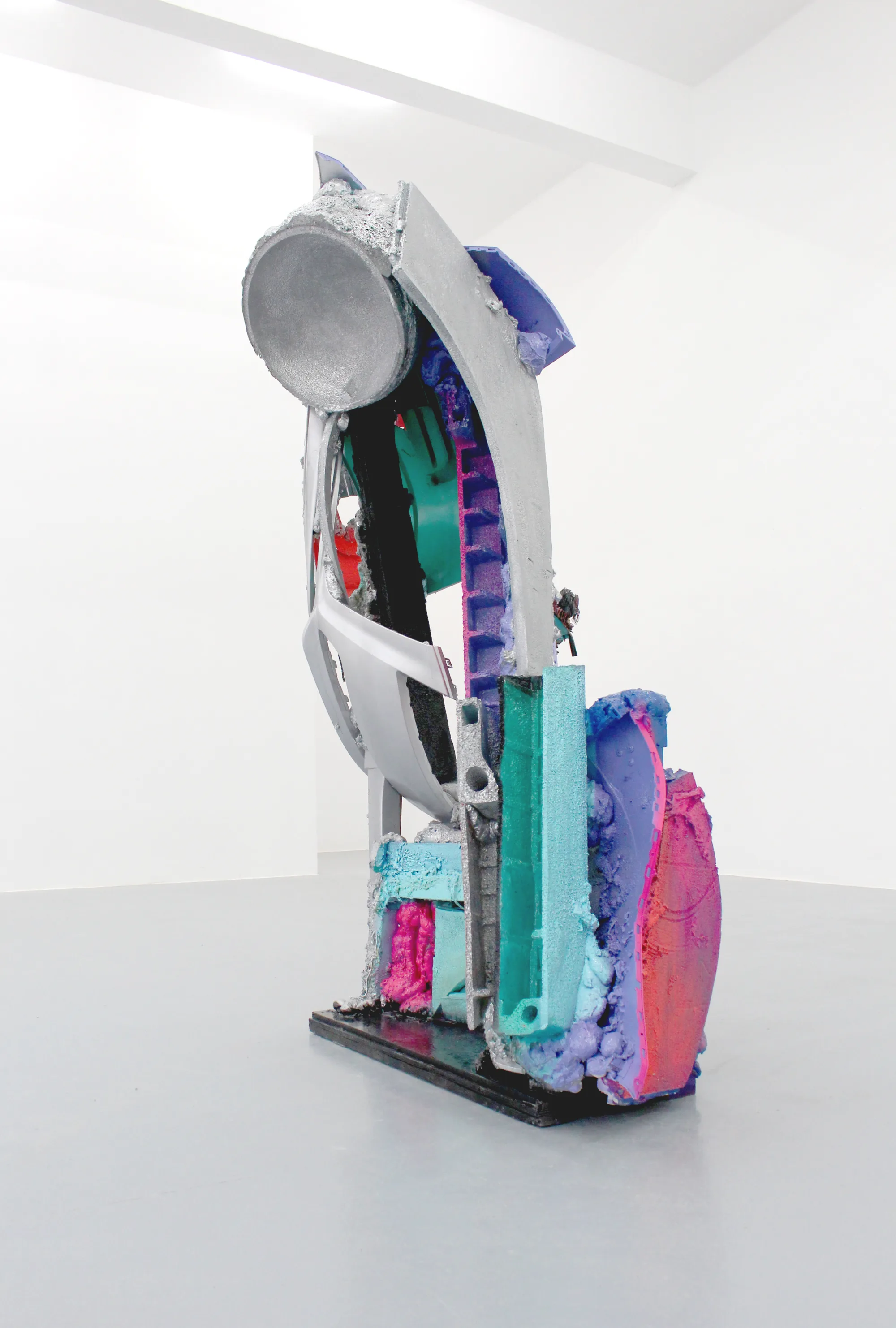
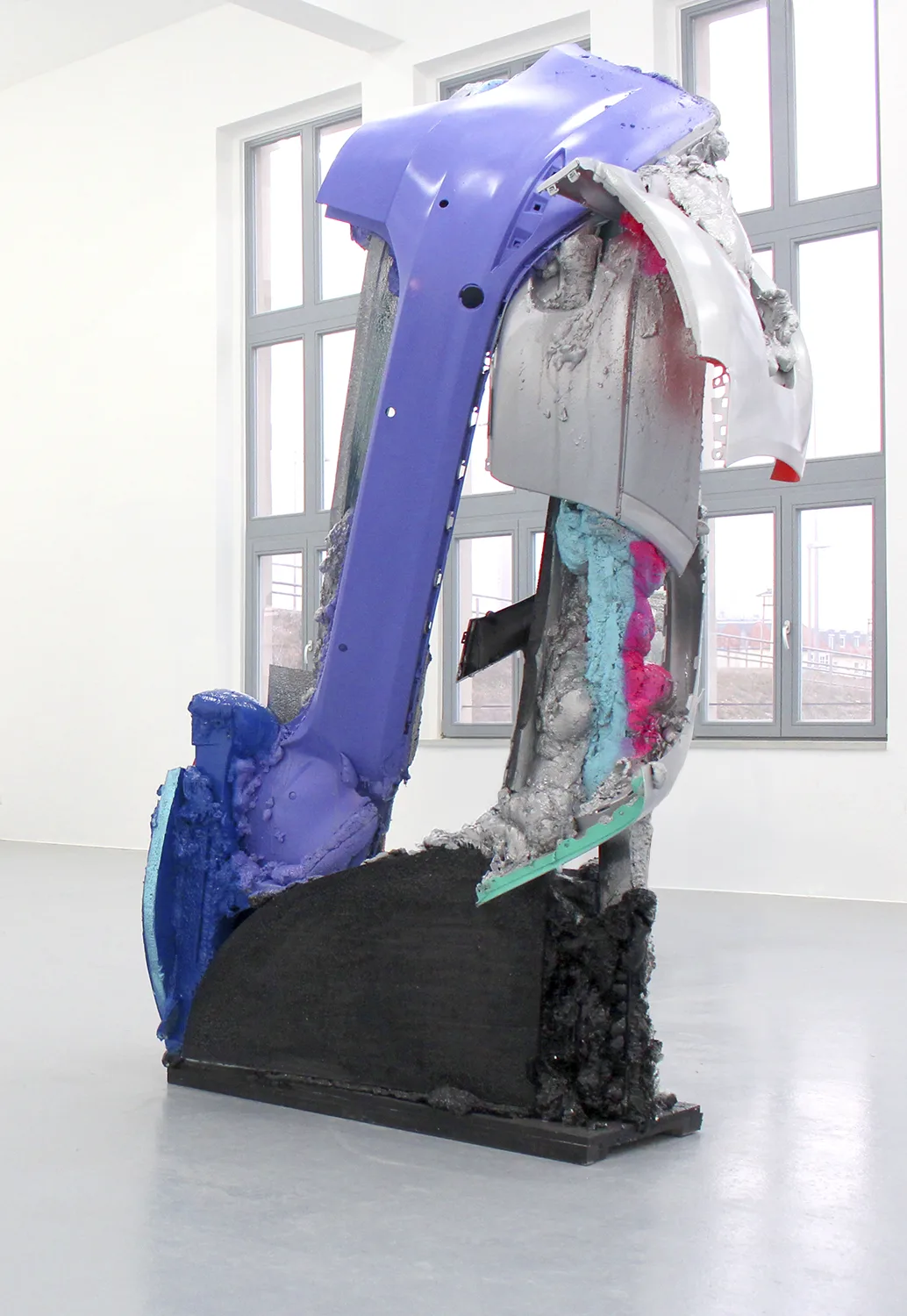
Werktitel: DREDDER
The sculpture DREDDER combines organically synthetic surfaces into a condensed object that appears both technical and unstable. Brutal structures and synthetic textures collapse into one another through a process of transformation, compressing into a form that exists between sculpture and wreckage.
Fragments of industrial mechanisms merge into a hybrid entity between machine, debris, and organic transformation. As if frozen in a state of pressure and acceleration, the materials seem to melt, deform, and flow into one another.
The name Dredder refers to futuristic urbanity, technology, and an exaggerated industrial aesthetic. At the same time, it linguistically echoes terms such as “dredge” or “shredder,” evoking associations of compression, disassembly, and material displacement. This creates an identity situated between urban machine aesthetics, industrial transformation, and futuristic visual worlds.
further reading
Exhibition
/ Biennale
Cottbus / Chóśebuz
05.09.—20.09.2026,
Kunsthalle Lausitz / Chóśebuz
Anne Peschken / Marek Pisarsky (Urban Art) Annette Hecht-Bauer Caroline Böttcher Casey McKee Jess Zamora-Turner Katharina Arndt Lioba von den Driesch Miriam Lenk Siggiko Valentina Troendle Tracey Snelling Felix Matschke Endstation Jam Martin Böttger
about the event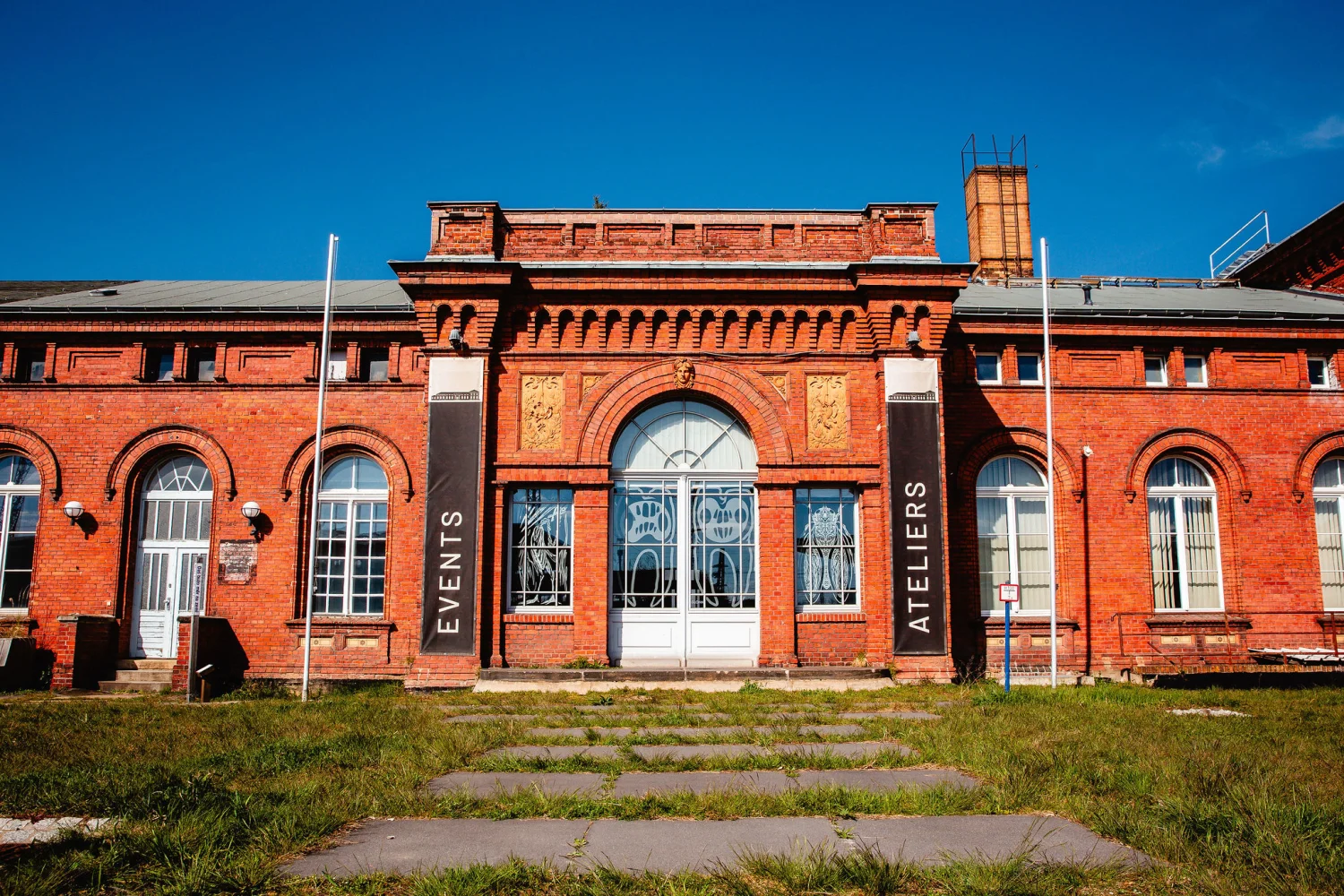
Vernissage
/ Biennale
Vernissage in der Kunsthalle Lausitz
05.09.2026,
Kunsthalle Lausitz / Chóśebuz
Anne Peschken / Marek Pisarsky (Urban Art) Annette Hecht-Bauer Caroline Böttcher Casey McKee Endstation Jam Jess Zamora-Turner Katharina Arndt Lioba von den Driesch Siggiko Valentina Troendle Felix Matschke Tracey Snelling Martin Böttger Miriam Lenk
about the event